
Art History as a Resource for Understanding Social Bias in Disability
In a dramatic presentation of imagery past and present, this author invites readers to consider ongoing attitudes toward persons with disabilities.


In a dramatic presentation of imagery past and present, this author invites readers to consider ongoing attitudes toward persons with disabilities.

In this powerful reflection, Siobhan Conaty shows how art history as a health humanities discipline can provide two uniquely different (yet equally important) teaching methods for students reckoning with a health crisis. One negative (a critical reading of graphic pandemic images) and one positive (looking to art as a powerful healing instrument), each serves an important purpose. Conaty details the positive approach she recently chose for her students — emphasizing art as a healing force.
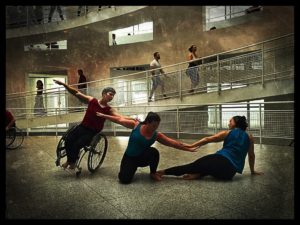
Melissa McCune reports on a recent dance project of Full Radius Dance—a company that integrates disabled and non-disabled dancers—which interpreted the works of artist Jean-Michel Basquiat. As a child, Basquiat experienced a debilitating injury that greatly influenced his art. Encountering groundbreaking works such as these, McCune explains, can help clinicians look beyond basic anatomy to see the “layered nature” of pain and disability.
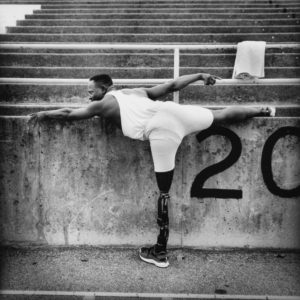
Both a book and an exhibit, Portrait of Spirit: One Story at a Time by Billy Howard and Maggie Holtzberg offers new perspectives while challenging the way we view the lived disability experience. Using stunning photographs and beautifully written narratives from Portrait of Spirit, this piece serves as an ode to the groundbreaking stories that started it all while advocating for continued societal change for people living with disabilities.
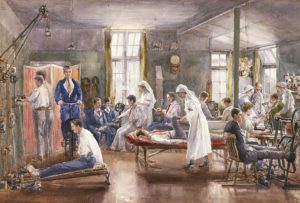
Heide Pöstges, MSc, PT explores the accelerated development of rehabilitation medicine during the First World War (WWI), through the artwork of British painter E. Horton. In the painting, “Physical Therapy at Bath War Hospital,” Horton depicts one of the very first physiotherapy departments in England. As Pöstges analyzes the painting in its historical context, we are given a new perspective into the socio-political-economic aspects of the evolution of physical therapy.
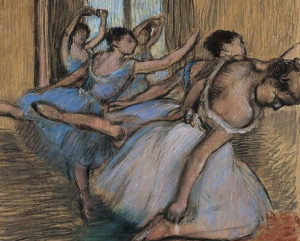
Melissa McCune, SPT takes you into the world of Edgar Degas as he captures the art of physical movement. She shows us how, at a time when art focused on the face, the clothing, perhaps the hands, Degas chose to focus his paintings “on the body as a whole to reveal its objective beauty and intimate connection with the space around it.”